
Potty Training Your Dachshund
Potty training a Dachshund can be a really big challenge for most doxie parents. Trust me, if you put in the time and effort now, it will help your puppy be a more obedient dog in the future.
Potty training your Dachshund involves learning the puppy potty clues, puppy-proofing your home, and using the correct training steps daily to help reduce the stress of potty training.
This page contains affiliate links and I earn a commission if you make a purchase through one of the links, at no cost to you. As an Amazon Associate, I earn from qualifying purchases.
Table Of Contents
Visit the Vet
If your Dachshund puppy has worms or a parasite in their system, it may cause unpredictable accidents, which they can’t help. Get your puppy dewormed and vaccinated right away.
When Should I Potty Train My Dachshund Puppy?
Depending on your location, your vet might recommend waiting until your puppy receives specific vaccines before training begins.
It’s a good idea to ask your vet before you begin.
After consulting with my vet, she confirmed that there were no potty training restrictions in my area, so I started potty training my Dachshund puppy the day that he came home.
Puppy Potty Training Week By Week
8-11 Weeks Old: At this age, your puppy will need to go potty several times per hour. See our list of puppy potty clues (below) to let you know when they need to go outside. Their little puppy bladders can’t hold much, so going outside and using the puppy pads inside will help.
12-14 Weeks Old: Continue letting your puppy out when they show you those puppy potty clues and plan to let them out every hour.
14-16 Weeks Old: Let your puppy out every 2 hours. They can hold it for a little longer now.
16-18 Weeks Old: Let your puppy out every 3-4 hours. After this age, let them out every 4 hours.
The ultimate goal is to have your Dachshund potty trained by the time they are 6 months old.
If You Aren’t Home During The Day
I understand, letting your puppy outside several times a day can pose a challenge for those who work outside the home. Here are some suggestions to help you if you can’t let your puppy out during the day.
Best Time Of Year To Potty Train
The best time of year to bring home and potty train a Dachshund puppy is during the warm spring or summer months. It is the most ideal time for housetraining success – Trust Me!
Avoid getting a new puppy during the cold winter months. Dachshunds hate cold weather and that can delay their potty training quite a bit.
Puppies aren’t fully in control of their bladder until about 4-6 months old. When they have an accident prior to this age, it isn’t their fault.
Puppy Potty Training Gear
Puppy Gates
Use puppy gates to close off any rooms you don’t want the puppy to visit. Keep your puppy in a section of the home that has easy to clean floors, like a mudroom or kitchen. A room with tiled or vinyl flooring is best.
In my home, the Walk Through Pet Gate works perfectly! It has a latched doorway so you don’t have to climb over it.
Don’t forget a retractable puppy gate for your stairs! This will help prevent your pup from climbing up and falling down those steep steps.
Puppy Playpen
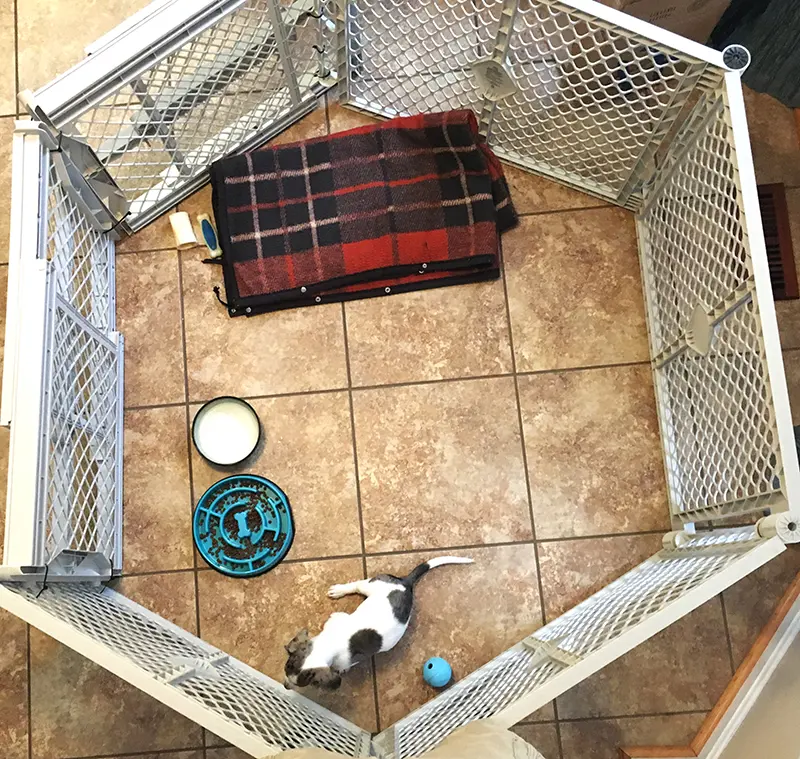
I set up a playpen in the kitchen for my Dachshund puppy, Eko. Puppy playpens create the perfect designated play space for your doxie. I used this playpen (from Amazon) for my kids when they were little and now I use it for my puppy, Eko.
If you don’t have enough room in your kitchen for a playpen, you can use a waterproof washable dog pad or pick up a piece of scrap vinyl flooring at the hardware store and place the puppy playpen on top. This allows you to place it anywhere with an easy to clean floor underneath.
The playpen area allows you to put your puppy in a safe space when it is time to take a nap or even a much needed “time out” when puppy teething and chewing gets out of control.
Puppy Pads
You can use old newspapers or puppy pads at the beginning of your puppy’s potty training, but they are not to be used exclusively. As your puppy improves their housetraining, start to gradually take the puppy pads away.
Hard To Gate Areas
Any area your puppy loves to chew, hide, or pee in needs to be gated off. Sometimes it is hard to cover all of your entrances, dangerous electric cords, etc… I like to use those large science fair boards or thick project poster boards to cover those areas. It works, and it’s cheap.
Puppy Potty Training Step by Step
Nighttime Potty Training
Sleep is going to be a little sparse for the next couple of weeks, but believe me, all of this hard work will pay off. If your puppy is crying all night in their pen or crate and you aren’t getting any sleep, Stop!
Here’s what I do: I put my puppy’s bed and blanket in my bed. It helped him calm down, we were both able to sleep, and he let me know when he needed to go potty.
Don’t worry, this is only temporary. After your puppy is fully potty trained, you can wean them into their own doggie bed on the floor or where ever you would like them to sleep.
What To Expect During Nighttime Potty Training:
- 8-10 Weeks Old: Dachshund puppies will need to go potty outside 1-2 times per night.
- 11 Weeks Old: They will need to get up 1 time each night.
- 12 Weeks Old: They usually can sleep through the night, but will need to go potty early in the morning.

Puppy Potty Training Clues
Predictable Potty Times
Puppies have predictable elimination times. Everyday, take them out to potty when:
- They wake up
- After eating
- After exercise or play
- Before they go to bed at night
Puppy Potty Clues
If you spot your puppy doing any of the following, take them outside:
- Stops current activity and sniffs the ground
- Turning around in circles
- Looking nervous
- Whimpering
Puppy Potty Training Tips
Designate Yard Area
Designate a potty spot in the yard for your puppy to do their business, preferably with the least amount of noise or distractions.
Don’t let your doxie roam the entire yard during the potty training process. They will start to understand what they need to do when you take them to that same spot every time for pees and poos.
If your doxie is puppy pad trained: You can take the pad to the designated potty area outside to help encourage your pup to start going potty outside instead of inside on the puppy pad.
Watch Carefully, Move Quickly
Watch your puppy closely! If you notice your puppy showing any of the potty clues above, take them outside fast. If you catch them mid pee or poo, pick them up and take them outside, even if they are still going.
Try not to get upset, just put the puppy outside in the potty spot and give them praise.
This will help them realize where they are supposed to go potty. Trust me, this method does work if you keep at it.
Don’t Let Them Roam
When an accident happens in your home without you noticing, don’t get upset. Puppies don’t understand why they can’t go potty inside. Try to be more attentive next time.
If you aren’t able to watch your puppy, don’t let them roam freely around your home. Always keep them in their gated area or playpen when you can’t watch them like a hawk. It is up to you to keep on top of them to make sure their training is successful.
Post You May Like: How to Teach Your Bossy Dachshund Who’s Leader of the Pack
Unnecessary Punishment
Punishment during the housetraining phase may prolong your dog’s training time and make it more difficult than it has to be. The old methods of sticking your puppy’s nose in their accidents are gone. Use positive reinforcement instead.

Praise And Reward
When your puppy does go potty outside, verbally praise them with “Good” and give them a small dog treat. Then, take the dog immediately inside the house.
Your Dachshund will begin to connect going potty in the designated yard spot with getting a positive reward and returning to the house.
This doesn’t happen overnight, it does take time. Be consistent even if it doesn’t feel like they are getting the hang of it – keep going!
Hire Help
I get it, many folks work outside the home and can’t let their puppy outside all day long. But, letting your pup outside consistently everyday during these first several weeks is key to potty training success!
If you are unable to let your dog out during the day, get some help. You can search online for local dog walkers, pet sitters, or doggie daycare in your area. You can also check out some phone apps like Rover or Wag.
Daily walks and potty breaks during the day will help your doxie remain calm while you are away.
They Can’t Hold It
Your Dachshund should not have to “hold it” for more than 4 hours at a time, at any age. That’s right! Even as an adult Dachshund, they will need to be let outside every 4 hours to maintain good potty training skills.
Making your Dachshund hold it all day or allowing them to have an accident in the house because you are gone too long will undo their potty training and cause serious separation anxiety issues.
Think About It: I know that I can’t “hold it” for 8-9 hours without using the bathroom, a dog shouldn’t be expected to hold it that long either.
Note: Always keep your puppy in a gated area or playpen when they aren’t fully being watched 100%.
Clean It Up
When your Dachshund puppy has an accident inside, thoroughly clean up the spot right away. Your pup will want to re-mark that same spot going forward if the smell remains.
Use a pet odor neutralizing spray from Amazon instead of a “deodorizer”. It is recommended to use a pet mess cleaner with the “enzyme” in it to get rid of any traces of strong smelling urine.
Note: Accidents are a part of the learning process.
The puppy doesn’t understand. Be patient and ask yourself, how can I prevent this next time?
Use A House Line
When potty training is going well and you feel like your doxie is ready to do a little more roaming, have your puppy wear a house line or lead. You can use a regular leash that can be attached to the belt loop of your pants or free to drag behind them.
It is helpful to have a house line to grab onto in case your puppy grabs something they shouldn’t – like a pill or your socks. You can use the house lead to redirect them to a toy that they are allowed to chew.
Never yank or pull hard on your doxie’s house line. Dachshunds are prone to IVDD and need to be treated gently.
Potty Privacy
Some doxies prefer to do their business at a distance from their owners – and that’s ok. As long as you keep a close eye on them or have a longer leash to give them some more space, that works fine.
When I was potty training my puppy, he had no issue with urinating near me when I set him in the grass, but when he had to poo, he would wander a few feet from me before relieving himself.
Potty Training Regression – Watch out!
Here it is! This is what really makes your Dachshund puppy different than the other dog breeds.
Dachshund puppies are famous for potty training regression around 4-5 months old.
Potty training regression is when they have been potty training super stars for weeks and then all of a sudden there are a few days in a row when the accidents just keep rolling in – out of nowhere.
All of my Dachshunds did this when they were puppies. Unfortunately, this is the point when many doxie parents give up.
But, believe it or not, you are about to cross the finish line my friend. Keep up with the potty training, and even take a couple steps back and be more on top of your pup when they start having potty accidents again.
Don’t Give Up
You will have good days and many bad days. It is part of the learning process. Be patient, this stage doesn’t last forever if you do it right. If you give up too easily, the training will never stick.
Bonus Potty Training Tip
When you doxie is fully potty trained, take them on a 20-minute walk BEFORE you leave for the day. This will help reduce any accidents they may have while you are gone.
Also, consider hiring a dog walker to give your dog a much needed potty break and a relaxing walk during the day.
Apartment Potty Training
Potty training a new puppy in an apartment is a whole different ball game. Check out our post on Apartment Dachshunds for some helpful tips.
Crate Training A Dachshund Puppy
Note: Never use your dog’s crate as a punishment. Crates are designated as the dog’s safety zone. You want them to love their crate and not feel anxious about being confined.
Crate Size and Placement
Choose a crate that gives your pup plenty of room to move around, but not too much room to allow potty accidents.
Place your Dachshund puppy’s crate near the most active room in your home. Your pup wants to see you and your family.
Put a safe chew toy in the crate with your pup to help them stay entertained and calm. Avoid putting any towels or blankets in the crate with your pup, they will get peed on.
You can give them a blanket or towel to lay on when potty training comes to an end or just for bed time at night.
Entering The Crate
To entice your dog to enter the crate, place a small dog treat in the front of the crate. Don’t shut the door, leave it open.
Gradually move the treat towards the back of the crate and allow them to exit after they eat it. It may take several tries over the next couple of days to get them to be comfortable with entering the crate.
When they do enter the crate, give lots of verbal praise. Be patient and never force your puppy inside the crate.
Food Bowl in Crate
Place your dog’s food bowl near the front of the crate. Sit with your pup while they eat. This helps your pup feel more comfortable during mealtime in the crate.
Keep the crate door open during this phase.
The ultimate goal is to have the bowl move towards the back of the crate gradually and having the dog feel comfortable eating inside the crate.
Once they are inside the back of the crate and eating without trying to escape, gently shut the door of the crate. Stick around and watch them eat to make them feel safe. Let your puppy out of the crate when they are ready.
Repeat
Repeat this training over the next several days leaving the door shut on the kennel for a little longer each time while you are nearby.
Finally, start leaving the room while they are in the kennel for a few minutes at a time. Your training is complete when you are able to leave the room for about 30 minutes without your dog getting upset.
Set a timer so that you can keep track of time. Depending on your puppy’s age, keep track of how often they need to go outside to potty.
When you perform your crate training gradually, this allows your pup to feel safe in his crate and teaches him when you leave, you do eventually come back.

Issues With Crate Training
If your puppy continues to have accidents or panic attacks in the crate, STOP using the Crate.
Crate training is a good option for some Dachshunds, but not all.
My Dachshund puppy, Eko, didn’t like his crate. He was petrified to go near it, even with yummy treats inside. I never forced him in, I just looked for an alternative.
The puppy playpen was the perfect solution for Eko! It is open on top and can be resized…which in my opinion, is better than a kennel or dog crate. You don’t have to purchase multiple kennels as your dachshund grows.
I kept my puppy’s playpen large so I could sit inside with him. This really helped him feel calm while in the playpen.
Why Is My Dachshund Still Peeing Inside?
Still having issues with potty accidents inside? If you are not able to watch your puppy the whole time, don’t let them wander around. They need to be in a kennel or a play pen to avoid accidents.
Let your pup outside to go potty often and keep visiting the same potty area in the yard to stay consistent. Reward your doxie, keep things positive, and keep going – even if it gets tough.

Bonus Tip:
If you are trying to figure out how to potty train a dachshund and could use a helping hand, no worries at all. Working with a professional dog trainer on a one-on-one basis can be a game-changer, especially when it comes to conquering those doxie potty training challenges.
Why Is Potty Training A Dachshund Challenging?
All dog breeds have their unique quirks. Well, prolonged potty training is one of the Dachshund’s famous quirks. If you have tried the steps above and still are not seeing any progress, don’t give up!
Dachshunds are hunting dogs. There are lots of distracting sights, sounds, and smells out there!
All of their senses are literally enhanced when they step outside. Concentrating on going potty is the last thing on your Dachshund’s mind.
And let’s not forget one of the other well known quirks of the Dachshund – the stubborn attitude. This usually comes later in life, but it’s something to keep in mind when your pup’s training suddenly changes.
That is why a Dachshund’s potty training takes a little longer than other dog breeds.
We want to hear from you! What methods do you use to potty train a Dachshund? Let us know in the comments.



Helpful Links:
References:
- Schweitzer, Karen. 2010. Our Best Friends the Dachshund. Pittsburg, PA: Eldorado Ink.
- Pinney, Chris. 2010, 2000. Dachshunds: A Complete Pet Owner’s Manual. Hauppauge, NY: Barron’s Educational Series, Inc.
Hi! I work full time and was trying to problem solve the toilet training situation.
I was thinking about potty training outside as well as on the synthetic grass potty pads inside the house. When I’m at work, put the dog in a playpen with the synthetic grass mat… is this a good idea?
Hi there, Thanks for writing in. I would suggest having a good couple of days in a row with your pup going through the puppy potty training steps outside if that is the primary place you would like them to go.. and when you need to go back to work, have a dog walker or someone come and let them out to potty to keep the potty training going. Doggie daycare is also an option for parents who work full time.
It takes up to 9 months to get a young doxie fully potty trained on average, and that is with someone letting them outside every 1 to 2 hours during the day to keep the potty training going.
If you would like the primary potty spot to be indoors and have synthetic grass placed in a good sized ‘puppy playpen or exercise pen’ area while you are away, then you can train them to go there (many apartment doxie parents use this method).
I wouldn’t suggest synthetic grass in the smaller kennel, as this is not a potty area. Training your pup to use both indoor and outdoor potty places may be confusing to some pups and delay potty training. So, it does help to stick to one. Training them to use one place to go potty takes a good amount of time and patience.
Best of luck to you. There are potty training step by step videos at the bottom of this post you can use to help you along.
I have a 6 year old Doxie. She does not have health issues and she is potty trained. We have a doggie door and she will u ti ate in the house less than 5 feet away! We do g know why or what to do.
Hi, the doggie door sounds really convenient but unfortunately doesn’t “confirm” that your dachshund has done their job outside. My dachshunds are 2 years old (Gretta) and 4 years old (Eko) now, and I have to go outside with them and watch them go potty before they have free roam access to my home. Dachshunds often get distracted outside with all of the interested sight, sounds, and smells – and going potty is sometimes ignored.
(Sorry if this is a repeat reply, my website’s server went down after I replied to my comments, so I’m not able to tell if they were received).
I have a Doxie that I got her from someone that was home all the time and was around other dogs and would love to be outside and come to find out after me having him for 9 months he is using the bathroom inside the house even after taking him outside when he goes outside. – it might not be right after but shortly after he will use it inside the house.
I do work so I am not home all the time and he does go in the crate, but I have noticed he has peed in the create even with no blanket in the bottom of the crate. I thought he has had UTIs because of the frequent peeing so he’s had antibiotics for that, but I don’t know what else to do to get him to stop peeing/popping the floor. especially if he did with the other owner when she was home all the time.
Any and all suggestions are welcome-
Hi Morgan, I’m so sorry to hear this. I understand this is so frustrating. Good thinking to check with the vet to make sure to check any health issues first – this can help eliminate that factor. Undoing what your doxie has been used to from his former owner is probably pretty frustrating for him too.
I usually recommend starting from the beginning of my potty-training lessons, with letting out every hour, rewarding when he does go potty outside…to kind of help “reset” his understanding of going outside, and gradually spreading that time out to every 2-3 hours, etc. I would personally just not do the dog crate anymore if he continues to mess inside. Use an open topped playpen instead (in the kitchen or tiled floor area, somewhere easy to clean). This is what I use for all of my doxies now, they just don’t like the kennels and it’s a lot more mess than it’s worth sometimes.
Here is my Puppy Potty Training Video Playlistif you would like some video guidance on training from the beginning.
Now, from there, your doxie will need to be let out during the day while you are at work. All dachshunds, at every age, even after being fully potty trained should not have to “Hold it” more than 4 hours at a time. So, I highly recommend a dog walker or doggie daycare to help with this. It’s a great way to get exercise, reduce boredom / accidents in the home / and a great booster for socialization and mental stimulation.
There is a 3rd option! If this all seems too much or you would like a bit more one-on-one help with training, I like the online dog trainer option – a lot! Here’s the link for K9 Training Institute.
[Note: The K9 Training Institute link is an affiliate link and I will receive a commission if you click through and make a purchase, at no cost to you.]
I understand this was a lot of info, I hope one of these options can help you and your dachshund out.