

Dachshund Allergies: 4 Proven Treatments That Actually Work
Because our long dogs are built so close to the ground, they seem to sniff out and pick up every little allergen in sight. If you notice your Dachshund excessively scratching, sneezing, licking their paws, or just acting uncomfortable, there’s a big chance they have allergies.
It’s important to find out what your doxie is allergic to before it leads to something more severe.
Let’s take a look at the symptoms and solutions to the most common Dachshund allergies. We finally found the proven treatments that can help your pup feel better.
Disclosure: This page contains affiliate links, and Dachshund Station may earn a commission from qualifying purchases at no additional cost to you. As an Amazon Associate I earn from qualifying purchases. See our Disclosure Policy for more info.
Table Of Contents
Are Dachshunds Prone to Allergies?
Yes, Dachshunds are prone to allergies that affect their skin and cause recurring ear infections.
Different foods and various environmental allergies can occur in any dog, but there are some specific dog breeds that are more susceptible.
Dachshunds, German Shepherds, Bulldogs, Golden Retrievers, and Pugs are more likely to develop allergies than other breeds.
Ear Infections: Your doxie’s ears will produce a heavy amount of ear wax when exposed to an allergen, which can lead to an ear infection. So, if your dog is constantly going to the vet with an ear infection, it’s probably allergies.
Dachshund Allergy Symptoms
An allergic reaction in Dachshunds can occur when the allergen is eating, absorbed through the skin, or inhaled.
Why is my Dachshund so itchy? Allergies typically manifest in constant skin itching and/or paw licking.
A Dachshund with allergy problems will exhibit the following symptoms:
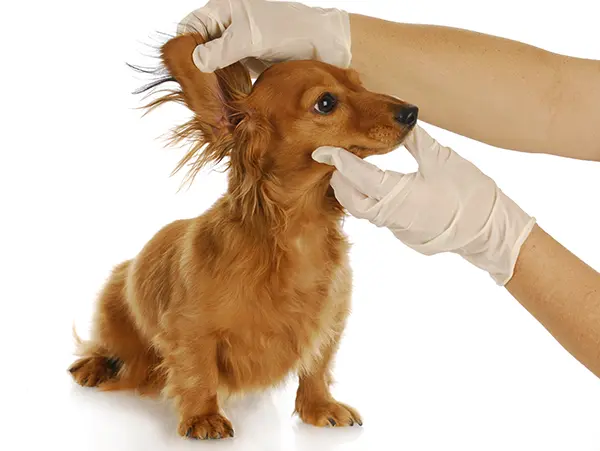
Severe Allergic Reaction
If your Dachshund has a severe allergic reaction, it could cause anaphylaxis, which can be fatal if not treated.
Symptoms include difficulty breathing, shock, vomiting, incontinence, and pale or white gums. If you notice any of these symptoms, get your pup to the vet immediately.
Most Common Dachshund Allergies
Dachshund Food Allergies: What You Need to Know
When you think of a dog food allergy, it’s easy to blame cheap fillers like corn or wheat. But true dog food allergies are almost always driven by the proteins, rather than the starches or grains.
The most common offending food allergens in dogs are:
- Beef: ~34%
- Dairy Products: ~17%
- Chicken: ~15%
- Wheat: ~13%
- Lamb: ~5%
Keep in mind, some starchy fillers like corn and soy can occasionally cause digestive issues (especially in doxies with sensitive tummies).
What Food Is My Dog Allergic to? (The Artemus Story)
My dog, Artemus, was severely allergic to anything Beef Flavored. One day, we bought him a beef flavored bone from the store and the next day his face was severely bloated, he was vomiting, and licking and itching his paws. That was a pretty clear indication that beef was one of his allergies.
If you notice your Dachshund exhibiting any of the Allergy Symptoms listed above, the first step is to avoid dog foods with beef or chicken.
Switch to a high-quality dog food that has duck, salmon, turkey, or venison as their main ingredient instead.
Dog Food: Giving your Dachshund a ‘limited ingredient’ hypoallergenic dog food can help alleviate their allergy symptoms.
Check out this list of hypoallergenic dog foods from Dog Food Advisor for some suggestions. If you’re unable to find the right food for your pup, consult your vet for suggestions.

Dachshund Seasonal Allergies:
You know it’s allergy season when you start sneezing and itching your watery eyes. We humans aren’t the only ones who suffer from seasonal allergies, many dogs get them too.
If your Dachshund tends to experience itchy paws at certain times of the year, they may have a Seasonal Inhalation Allergy, also known as Canine Atopy.
Seasonal allergy symptoms include: sneezing, itching, rubbing their face, and licking their paws.
This is caused by seasonal pollen and it’s a lot like hay fever for people. Instead of respiratory problems, doxies are more affected with sneezing, licking, and itchy skin issues.
The Dachshund dog breed is more likely to be affected by seasonal pollen than other dog breeds.
Dachshunds are lower to the ground. Their bellies, paws, and arms are all exposed to grass, carpets, dusty floors, etc… making it more likely to cause skin irritation and allergies.

Allergic to Bugs:
Your Dachshund could be allergic to bug bites! A bite from a flea or dust mite can lead to a condition called Flea Allergy Dermatitis.
If you notice itchy bumps near your doxie’s tail, neck, back, or belly, your pup may have had an allergic reaction to a bug bite.
Vaccine Allergies:
Allergic reactions to vaccines can show up differently in dogs than they do in people.
Because of a super scary reaction my own doxie had (his story below), I always space out my Dachshund’s vaccines.
They’re absolutely important for keeping your dog safe – I just prefer to do one at a time and give it a couple of weeks before the next one.
It’s a simple step that could genuinely protect your little long dog. And if your Dachshund ever reacts badly to a vaccine, don’t wait – get them to the vet right away!
What a Severe Vaccine Reaction Really Looks Like (Eko’s Story)
When my 1-year-old Dachshund puppy, Eko, received his rabies booster shot from the vet, he had a severe allergic reaction within 45 minutes.
Eko and I went for a walk around the block after his shot appointment. While on the walk, he got sick to his stomach and had diarrhea twice. Then, he laid down in the grass and started panting. When I picked him up, he was totally limp in my arms.
I rushed him back to the vet and they had to put him on IVs to get his system back to normal. This was a very frightening experience for me, but luckily, we didn’t lose him.
Now, Eko only receives the core vaccines from the vet, and he has to have a series of meds before and after his shots. I also have the vet watch him for about an hour after the shot…while I go pick up some doggie toys at the store.
Because I spaced out his vaccines, we could identify which one caused the reaction and could handle it differently going forward.
Irritants:
Environmental and chemical agents in your home can cause your Dachshund to experience itchy skin and continually chew and lick their paws.
Allergens in the Environment include Smoke, pollen, lawn and garden pesticides.
Indoor Allergens consist of perfumes, fragrances, shampoos, dust, plants, detergent, and household cleaning products.
Essential Oils can also cause issues with dogs. Be careful which ones you diffuse in your home.
Check out this list of Dangerous Essential Oils for Dogs from AKC.org.
Pet Dander:
Your little long dog might actually be reacting to other pets in your home. I know this isn’t the easiest news to hear, especially since so many of us have multiple pets at home. But it’s important to keep on your radar.
While many usually call it a ‘fur allergy,’ your doxie isn’t actually allergic to the hair – instead allergic reactions are triggered by the other pet’s dander and proteins found in their saliva!
Yeast Infection:
Just a heads-up: Yeast isn’t actually an allergy on its own. It usually pops up because our pups keep licking or scratching from whatever real allergy is bugging them underneath.
Unfortunately, constant licking of their paws or skin can make your Dachshund more susceptible to yeast infections.
These infections cause increased itching and can turn your doxie’s skin into a crusty-like texture, sometimes with a foul odor.

Dachshund Allergy Solutions
Ok, let’s take a look at some effective Dachshund allergy solutions to help your pup feel so much better.
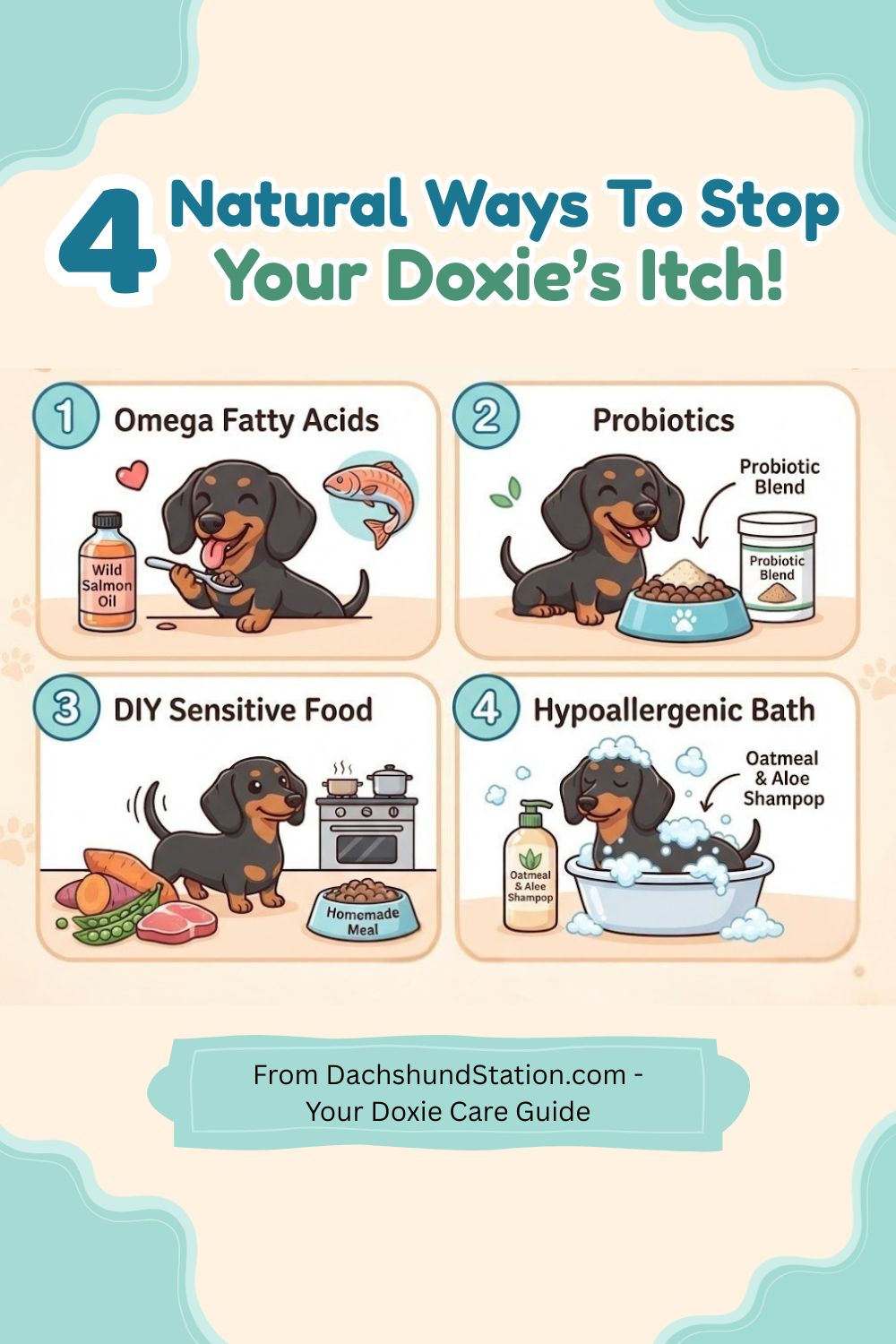
1. Omega Fatty Acids
Dogs can’t synthesize essential Omega-3 and Omega-6 fatty acids on their own, they must obtain them through their diet or a supplement.
Omega 3 fatty acids have anti-inflammatory properties that can help manage allergies and promote a shiny coat and healthy skin.
Some dog foods do include Omega fatty acids, but the amounts are not always sufficient enough for your pup.
Fish or Krill Oil: Wild Salmon Oil is a great way to add in both Omegas 3 and 6 to your doxie’s diet. It’s a yummy dog food topper that will help them eat their kibble with no fuss. Win-Win!
Pumpkin Puree: Alternatively, you can add some plain canned Pumpkin Puree to their food for an Omega boost! It contains Omega 3, Omega 6, and fiber to help stop that itch.
Related Post: 12 Delicious Reasons Why Dachshunds Should Eat Pumpkin
2. Probiotics:
Probiotics are not only good for your own gut but are also very beneficial to your Dachshund’s gut as well. Adding probiotics to your dog’s diet can actually help reduce the likelihood of allergies or skin issues from developing.
The VertiScience Probiotic from Amazon is my doxie’s favorite. Alternatively, your vet can also prescribe probiotics for your dog.
Find Out More: 6 Signs Your Dachshund Needs Probiotics
3. DIY Dog Food
Some Dachshund owners prefer to make their dog’s food at home to reduce allergies. By using your own natural ingredients at home, you know exactly what your dog is consuming.
Note: Always consult your vet about your dog’s homemade food recipe to confirm that it is fulfilling all of their nutritional needs. They can help recommend a well-balanced meal plan and amount per serving for your dog.
DIY Dog Food Recipe Links:
4. CBD Oil
Many dog parents report that CBD oil is a game changer for helping soothe extra stubborn allergy itching. Vets generally note that while it can be a helpful natural support tool, the product’s quality really matters!
Note: Always look for a 3rd party, lab-tested, pet specific formula. Start with a low dose and make sure to check with your vet before trying it out – especially if your Dachshund takes other medications daily.
Vet Treatments
While natural supplements and diet changes work wonders for doxies, sometimes a more severe flare-up needs a little extra help from your dog’s vet with anti-itch medications.
Always check with your vet to find out if medication is the right next step for your pup, especially if your Dachshund is really struggling.

Allergy Prevention Methods
Here are a few strategies you can use at home to help reduce your Dachshund’s itchy skin and paws.
Still Having Allergy Issues?
It can be a challenging process to determine what your Dachshund is allergic to, but it can be done. If you have tried switching dog foods and adding supplements, but it just isn’t working…consider having your dog tested for allergies at the vet.
Generally, your vet will do a blood or skin test to find out what allergens are bothering your poor doxie and help come up with a treatment plan.
Related Post: Dog Allergy Testing: How Much Does It Cost And Is It Worth It?
As Your Dachshund Grows
Some Dachshunds can outgrow allergies that affect them as puppies. As your dog grows, their immune system gets stronger. On the other hand, some allergies can unfortunately worsen with age and cause more severe reactions…so that’s a bit of a bummer.
Does Your Dachshund Have Allergies? What helps your doxie feel better?





Is there certain types of grass or weeds wire hairs are more prone to having reactions? We have 2 shirt hairs and 2 long hairs that are brother and sister. The male has had reactions when out for walks on our land. We don’t use chemicals or pesticides. He whines, shakes his head, and rubs the floor with his face. Thank you for any ideas.
Oh no, your poor pup! Grass/weed pollen allergies are definitely common with the doxies. A contact reaction to a particular plant, or an irritation from grass seeds/foxtails that get into the ears, nose or fur. Dogs with attached foxtails often shake their head, rub their face or paw at the spot because the awn is painful, while pollen/grass allergies more often cause itchy skin, rubbing, watery eyes or sneezing.
Here are some things to try:
(In case it’s a foxtail plant)
-Check the ears, around the eyes, nose and under the chin for redness, discharge, swelling or visible grass seeds. Head-shaking + face rubbing can mean an ear problem or a lodged grass awn.
-Run your fingers through his coat (and check inside ear flaps gently). Trim long hair around the face/ears so foxtail seeds can’t hide. If you find a stuck foxtail, don’t try to dig deep — contact your vet.
-Wipe/rinse after walks: use a damp cloth or dog-safe wipes on face, paws and ear flaps after they’ve been in long grass. It helps remove pollen/seed debris.
**Grass pollen is often worse on windy days and in the morning; shorter walks or avoiding high-seed areas can help. Mowing high-pollen seedheads down can reduce allergy exposure as well. If it’s recurring, see your pup’s vet.
vet says no ear mites no infections no cleaning issues help—keeps shaking his head–incesivelly
Hi, oh no, poor pup. Glad the vet checked it out. Did they mention food allergies at all? That can sometimes cause irritation in the ears.