
Successful Therapy for Dachshunds with IVDD
IVDD can be a scary diagnosis for any Dachshund owner. Don’t lose hope! There are many Successful Therapy Options for Dachshunds with IVDD, with or without surgery.
This page contains affiliate links and I earn a commission if you make a purchase through one of the links, at no cost to you. As an Amazon Associate, I earn from qualifying purchases.
Treatment methods for IVDD include Hydrotherapy, Laser Therapy, Acupuncture, Stem Cell Therapy, and Physical Therapy exercises.
Table of Contents
What is IVDD?
Intervertebral disc disease, also known as IVDD or slipped disc disease, is an inherited condition of the spine.
IVDD is a disease caused by progressive degeneration of the intervertebral disks.
As the disks degenerate, they calcify and lose their shock-absorbing ability. The disks will then become more susceptible to compression damage, even from normal activities.
The contents of the disks will then go into the spinal canal and place pressure on the spinal cord. Severe or prolonged pressure on the nerves can lead to pain, loss of bladder or bowel control, or even paralysis, to the spinal cord. [2]
How Long Does IVDD Take to Heal?
After IVDD surgery, your dog will need crate rest, pain management, and physical therapy for about 6-8 weeks in order to properly heal.
It is important to have physical therapy scheduled for your dog after surgery to help them regain their strength, because many doxies do walk again.
Some physical therapy can be done at home, while others will require you to take your dog to a qualified canine rehabilitation therapist (either a Physiotherapist or Veterinary Surgeon).
Emergency Symptoms Post-Op Recovery:
If any of the following symptoms occur while your Dachshund is recovering from IVDD surgery, call your vet ASAP:
- Pain, weakness, or immobility
- Vomiting or diarrhea
- Difficulty with urinating or defecating
- Blood in the urine or stools
- Stops eating or drinking
- Acting lethargic
Treating IVDD in Dogs
Treatments for IVDD can go one of two ways: Conservative (non-surgical) or Surgical. It all depends on the severity of the damage to the spinal cord.
1. Conservative Treatment Method: (No-Surgery)
The Conservative Treatment Includes:
- Anti-inflammatory medication from your vet
- Crate rest for 6-8 weeks
- Reduction of Activities
Can a Dog Recover from IVDD Without Surgery?
The conservative method is not the “cure all” for IVDD. It is a treatment for the current spinal problem in order to help the dog heal.
When my miniature dachshund, Reno, occasionally would have issues walking. My vet gave him some medication to help reduce the inflammation and pain he was experiencing. That really helped him get back to feeling like himself again.
Check out the YouTube Video IVDD in Dogs: JP’s Story. JP was able to walk again using conservative treatment methods. Credit to Southern Cross Vet Clinic cc.
2. Surgical Treatment Method
“If the damage is too severe and the dog is paralyzed or incontinent, conservative treatment may not be enough. In many cases, emergency surgery is needed to open up space. This is done by removing a portion of the bony vertebrae over the spinal cord (laminectomy). Even after surgery, however, the dog may not recover fully.” [7]
At the first sign of IVDD Symptoms, it is crucial to get your dog to the vet. If surgery is required, the sooner they have the operation the better chances of success they have to be able to walk again.
It is recommended that you have your dog’s surgery done by a trained neurologist, not a general veterinarian.
If successful, this surgery may fix the injured discs, but with IVDD, it is unfortunately possible that other discs can rupture in the future.
Successful Therapy for Dachshunds with IVDD
IVDD rehabilitation services consist of progressive treatment plans that address your dog’s strength, range of motion, pain, balance, and mobility. Some treatment methods include the following:
- Hydrotherapy
- Laser Therapy
- Acupuncture
- Stem Therapy
- Physical Therapy Exercises
These methods can be used as conservative treatments or post – surgery treatments.
Hydrotherapy:
Hydrotherapy means “Water-Healing.” This type of therapy involves your dog swimming and the using an underwater treadmill. Being in the water creates resistance and will cushion your dog’s joints.
How Does Hydrotherapy work for dogs?
Post-Op Hydrotherapy Story:
Viivi, the wire-haired miniature dachshund contracted IVDD when she was just 4 years old. Check out Viivi’s Story for details on her symptoms, surgery, and rehabilitation.

Laser Therapy:
With the help of Laser Therapy, Dogs that are not able to stand or walk can regain strength and get back to normal doggie activities.
Laser Therapy reduces IVDD pain naturally and helps speed up healing time.
Is Laser Therapy Effective For Dogs?
Laser Therapy works directly on the affected areas. It can strengthen your dog’s muscles and improve mobility.
The LumaSoothe LED Laser device pictured below is one of the ‘lower cost’ laser therapy devices available for home use. (This is an affiliate link from the LumaSoothe Amazon Store).
Please Note: LED Light Therapy at home is safe and effective, however, always avoid direct contact with your eyes and your dog’s eyes.
Read more about Cold Laser Therapy for IVDD from our friends at You Did What With Your Weiner.
Acupuncture:
The Acupuncture method used for IVDD reduces swelling, pain, and inflammation. Acupuncture can restore the damaged nerves and promote faster healing.
Stem Cell Treatment:
Many studies are underway using Stem Cell treatment for dogs with IVDD. Check out Jasper the Dachshund’s story on YouTube and how he regained his mobility using Stem Cell Treatment.
Physical Therapy Exercises For Dogs With IVDD:
The following are a list of exercises your dog may need to do post IVDD surgery. Only do the exercises that your vet recommends for your dog.
Natural Supplements For Dogs With IVDD:
There are two natural supplements recommended for dogs with IVDD: turmeric and omega-3s.
Note: I am not a veterinarian. I am suggesting products that I have researched. Always check with your Vet before giving your dog any supplements.
1. Turmeric
Turmeric can help dogs who suffer from chronic joint pain by reducing inflammation.
You can add this supplement to your dog’s food, or purchase a soft chewable tablet on Amazon.
Keep in mind, not all dogs can tolerate turmeric. It is a warming supplement, so if your dog seems pant a lot or sleeps on the cool floor, skip the turmeric.
Caution: If your dog’s on any medications, check with your vet before adding turmeric to her diet. Turmeric can interact with some medications, including anti-inflammatory and diabetes drugs, and chemotherapy treatments.
2. Omega-3s
Omega-3s can help dogs who suffer from joint pain by reducing inflammation. Avoid purchasing “Fish Oil” based Omega-3s for dogs because it can be toxic.
Read more about Omega-3s for Dogs from Dogs Naturally Magazine.
Dachshund Mobility Aids
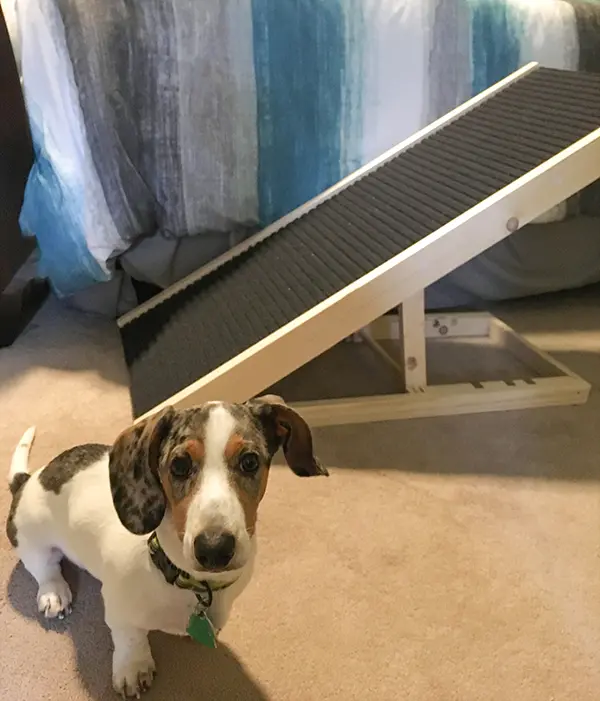
In addition to the above treatment options, you may also want to try a mobility aid for your doxie. You can equip your dog with some wheels or a supportive back brace to help them get around with ease.
Dachshund Ramp:
Harness and Sling:
This dog support harness and rehab sling gently loops under your doxie, just in front of the back legs.
I recommend pairing the rehab sling with the IVDD-friendly harness from DJANGO for extra strong support. Use code DACHSHUNDSTATION for 10% off on DJANGO.
Note: The Django Brand link is an affiliate link and I will receive a commission if you click through and make a purchase, at no cost to you.
As a part of IVDD recovery and prevention, a canine orthopedic back brace (recommended by your vet) can also help your Dachshund regain their strength and sense of independence.
Dachshund Wheelchairs:
Your dog’s vet can help you find or customize a special wheelchair for your dachshund with IVDD.
A doggie wheelchair can provide excellent support for dogs that suffer from weakness or paralysis.
Here are a couple of options for you:
Will My Dog Recover From IVDD?
Conclusion:
Unfortunately, IVDD can keep your dachshund from doing all of his favorite things: playing, jumping, and digging. Using IVDD prevention tips can help reduce the risk of your dog getting IVDD.
If your Dachshund has been through IVDD, please post some lessons learned in the comments below. We would love to hear from you.
Up Next: Best Harnesses For Dachshunds
Helpful Resources:
- DodgersList IVDD Forum: Learn more from other dog moms and dads about IVDD.
- What is the cost of IVDD Surgery for Dogs?
- IVDD Info on Pinterest
- DodgersList Physiotherapy YouTube Channel for a post-operative paralyzed dogs.
- Crate rest for dogs: advice for vets by Dr. Marianne Dorn.
Sources:
- Schweitzer, Karen. 2010. Our Best Friends: The Dachshund. Pittsburg, PA: Eldorado Ink.
- Pinney, Chris C. 2010, 2000. Hauppauge, NY 11788.
- NorthStar VETS Vet, NJ. Avoiding back problems in Dachshunds
- UCDAVIS Veterinary Medicine.
- Dachshund Health UK
- Pet Health Network
- PetMD
- Dogs Naturally Magazine
Scrappy is our 10 yr old who has his mom’s back. A few weeks ago Scrappy had a run in with my grandson and came out with damage. We took him to vet immediately and then to surgeon. Surgery was suggested but could not be performed due to CT scan being broke. Had no other choice due to enormous costs and lack of other qualified surgeon but to wait. We decided steroids and pain meds were best to be used during wait. A laser treatment and being confined went with. Within a week, still waiting for the CT to be fixed, Scrappy started to walk on his toes and not drag his leg. He is still wobbly but surgeon says hes on the heal and even though CT is finally fixed we may not need surgery now. Only time will tell. It’s been 2 weeks and they say to wait another 2 to see how he does with the measures we are using. We’ve been lucky so far. Earlier in life his brother faced the same dilemma and we ended up doing surgery, today he is back to a normal life too.i guess my outlook is, although its expensive, surgery, if available, is the way to go because in either instances the healing takes time but even afterwards the laser is worth every penny.
Hi D Morris, Thank you so much for letting us know about Scrappy and his Brother’s story. I’m so glad Scrappy is doing well after his laser treatment, steroids, and confinement. It is unfortunate that the surgery does cost a lot to save our doxie’s back issues. I’m glad the surgery worked for Scrappy’s Brother. We are very fortunate that they have a lot of alternative methods to try as well.
Thank you so much for your site. My little guy Oscar just had surgery to repair a ruptured disk. He had symptoms for maybe three days then had problems standing and was dragging his left back leg. We were fortunate enough to have a hospital that has an MRI and he had surgery the next day. We are three days out from surgery and he seems to be doing really well. He’s going potty on his own and can bear weight on both legs. I’ve never crated my doxies before so I’ve learned a couple of things about crates: Even though Oscar is only 12 pounds and 22 inches long he needs a crate big enough to turn around so we got a 30X18 and it’s working great. Also it’s impossible to lift him correctly using the crate doors so we took off the top hinges and now we can lift him out. We’re also doing cold laser twice a week and he does seem a bit calmer after. I haven’t found too much on post-surgery rehab so Oscar and I really appreciate all the information.
Hi Annette, Thank you so much for your comment. I am sorry Oscar had to have surgery, Poor guy. I do hope he continues to do well with his post surgery therapy. Are you planning on trying Hydro / water therapy as well? That is great that he is responding well to the cold laser therapy. I like the idea of opening up the crate from the top to help him get out, good idea. Thanks so much for sharing.
I’m glad that there are some ways to treat it now! Thanks for recommending a good source for Omega 3, and the interaction potential problems with turmeric. I did not know about either of those.
Hello, Thank you for your comment. Yes, the Omega 3 and Turmeric are also great for inflamation causing pain and arthritus in dogs. As they get older, it is a big help for their joints.